Wrapping your little one – is it really worth it?

Babywearing is becoming more popular by the day. More and more new mums are choosing convenience. But is it really just about comfort? Besides “free hands” and easier housework, carrying your little one in a wrap brings a whole range of other benefits.
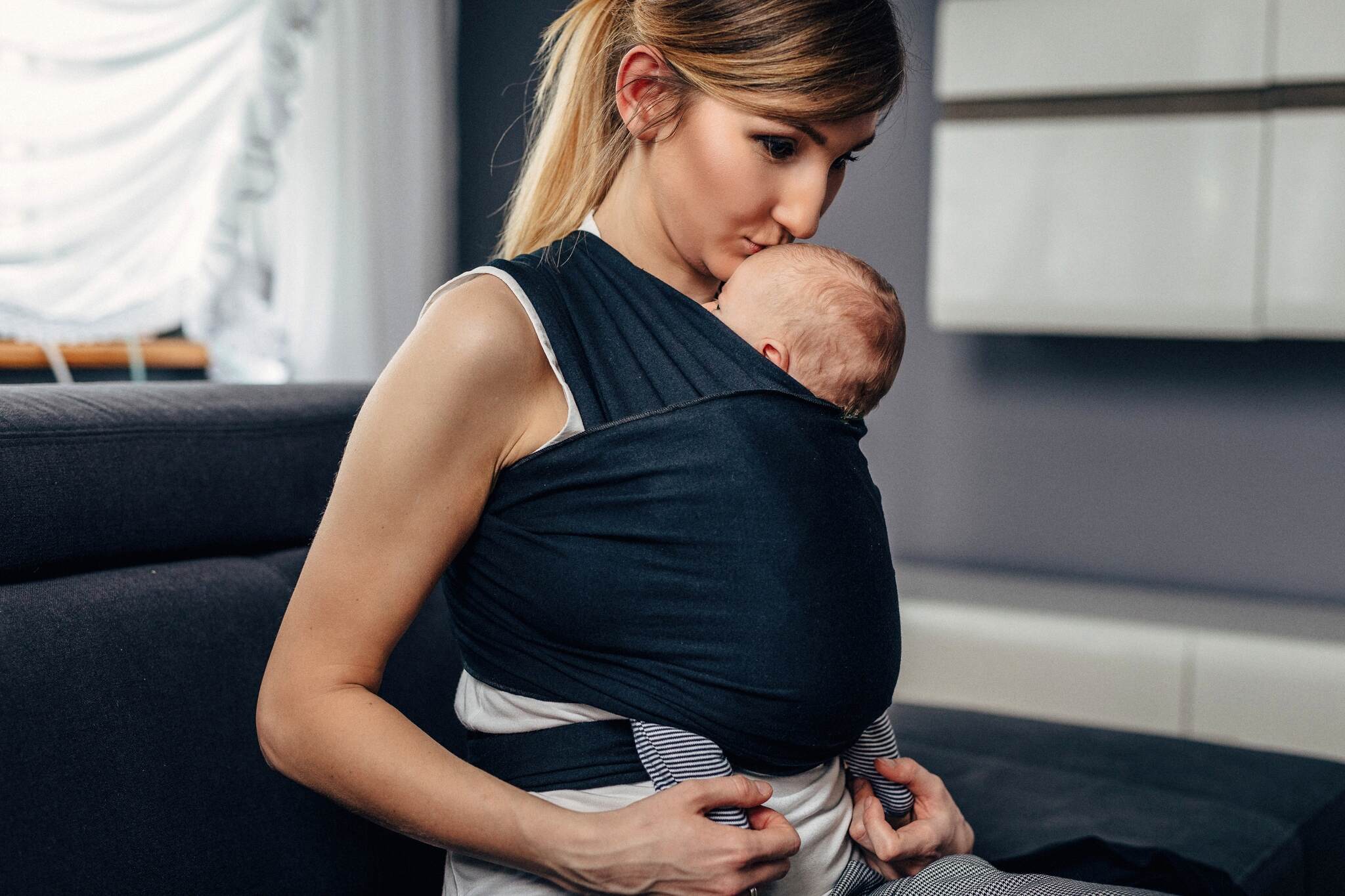
First, for nine months a tiny human lives in a rather special environment. It’s snug, warm and dark, and sounds are muffled. How does a baby feel wrapped in a wrap? Exactly the same! You could say the little one is, to some extent, shielded from the surrounding world, which is unknown and strange to a newborn. But above all, the baby is close to mum. All these things resemble the conditions babies experienced in the womb. That’s why little ones usually calm down, settle faster and fall asleep in a wrap. They feel safe and close – in other words, happy.
Second, a newborn or infant is learning their own body map. This happens thanks to the proprioceptive (deep sensation) input provided by being wrapped. The receptors of the kinaesthetic sense are located in muscles and tendons. This system picks up sensations of pressure, stretching and the position of body segments in relation to each other. Proper integration of proprioceptive input is essential for a child’s healthy psychomotor development.
Choose your wrap HERE
The third, equally important benefit of babywearing is that it supports the correct position of the hip joints and spine. As parents (more and more aware these days), we can help our child’s musculoskeletal system develop properly. Hips positioned in the “frog” (M) position – that is, with the right degree of abduction (about 60 degrees in a newborn, moving towards 90 degrees as the child grows), flexion (about 110 degrees) and external rotation of the legs – allow the head of the thigh bone to sit centred in the hip socket. This is extremely important for healthy bone development and for preventing hip dysplasia. Remember, however, that advanced dysplasia requires specialist treatment, usually including an orthopaedic brace. If you have any doubts, consult a specialist doctor and a paediatric physiotherapist.
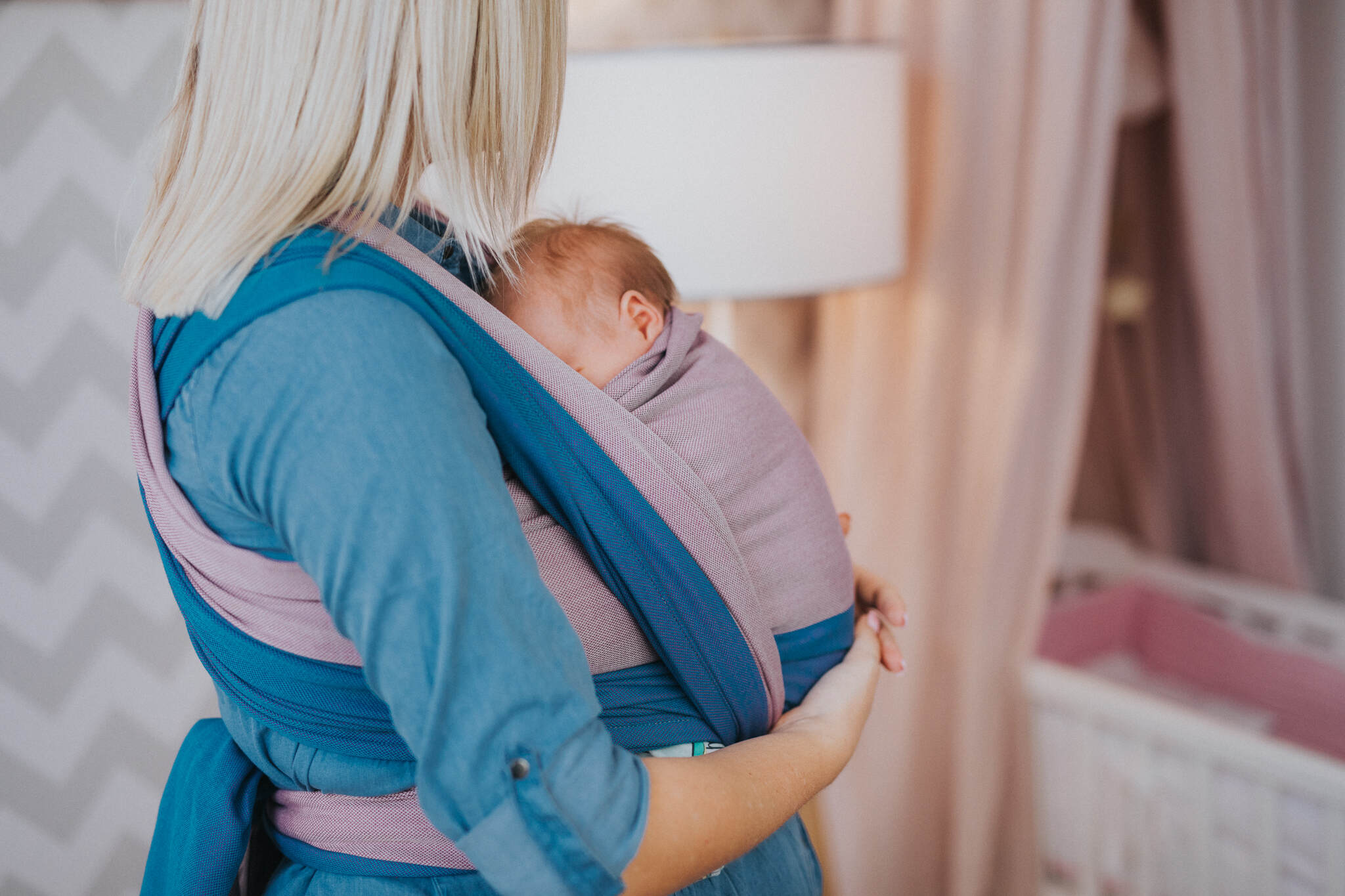
As for your baby’s spine – a baby in a wrap is not being made to stand upright, despite the seemingly upright position. Don’t worry about that! That’s exactly why you can wrap newborns and babies who can’t sit up on their own yet. Deep flexion at the hips, a rounded spine, a tucked pelvis and being “hugged” to the parent’s body let the baby relax and settle into a natural position. Little ones don’t yet have the physiological curves of the spine (the double “S” shape). For them, the norm is a “C” shape – a strongly rounded spine with the tailbone tucked under, i.e. total kyphosis. The neck curve (cervical lordosis) begins to form when the baby lifts their head while lying on their tummy (around 3–4 months). The upper back curve (thoracic kyphosis) forms as they roll, sit up on their own and crawl, and the lower back curve (lumbar lordosis) as they stand up and walk independently.
A wrap can support a child’s healthy psychomotor development – but only when the little one is wrapped correctly. The carry must be tied carefully, the baby positioned properly and the wrap tightened well. If you’re not sure you’re doing a carry right, it’s essential to see a babywearing consultant or a physiotherapist.
author: Katarzyna Kabuła IG: @fit_physio_active